Samuel Ward Academy

Our Art Department

Creativity, Innovation, Inclusion and Global Creative Education | A Global Centre for Creative Education, Innovation and Opportunity.

Above the Noise.

The Samuel Ward Art and Design Department represents far more than a traditional secondary school art department. Its connected creative platform and studio identity bring together curriculum development, virtual galleries, student resources, global collaborations, exhibitions, outreach programmes and community engagement within one evolving creative ecosystem.
The department has developed a reputation for innovative and internationally connected creative education that extends far beyond the expectations of a conventional classroom model. The department has created a recognisable creative culture built around ambition, inclusion, professional practice, student voice, enrichment and global awareness.

The department’s online platform supports students, staff, parents, artists, educators and creative organisations through interactive learning resources, virtual exhibitions, curriculum support and international partnerships, while the physical studio environments operate as highly active creative spaces where students engage directly with practising artists, contemporary visual culture and real-world creative experiences.

Together, these elements function as a single, connected creative community rather than as isolated educational structures. Through its teaching, virtual platforms, exhibitions, partnerships, outreach programmes and global collaborations, the department has developed a recognised reputation for innovative creative education that reaches far beyond the walls of a traditional school.

Built around the philosophy that creativity should be accessible, aspirational, globally aware, and deeply personal, the Samuel Ward Art Department has developed Deya Zone into a one-stop creative platform and studio identity that supports students across all key stages while also connecting parents, artists, educators, cultural organisations, and creative communities around the world.

This combined identity allows the department to move fluidly between physical teaching spaces, virtual galleries, outreach projects, exhibitions, international conferences and digital learning environments while maintaining a strong and consistent educational vision.

The platform celebrates the work, voices and ideas of young people while promoting a curriculum model that combines traditional artistic skill, contemporary practice, digital innovation, cultural awareness and personal creative growth. It reflects a department that believes creative education is not simply about passing examinations, but about developing confident individuals capable of contributing to culture, society and the wider creative industries.

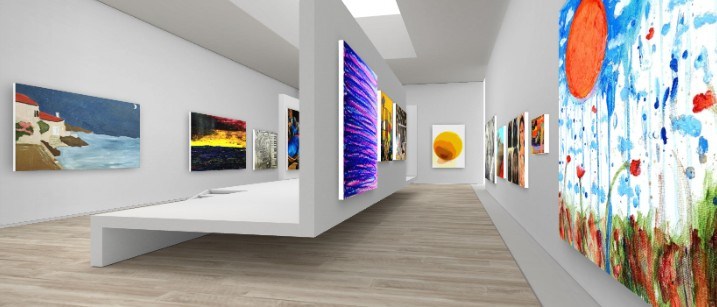
At its core, DeyaZone is designed to support young people in finding their voice, building ambition, developing professional standards and understanding how creativity can shape both personal futures and communities.

Please click on the links below to access more information.


One of the defining features of the Samuel Ward Art Department and its Deya Zone studios is that its teaching staff are practising artists, designers and creative professionals.

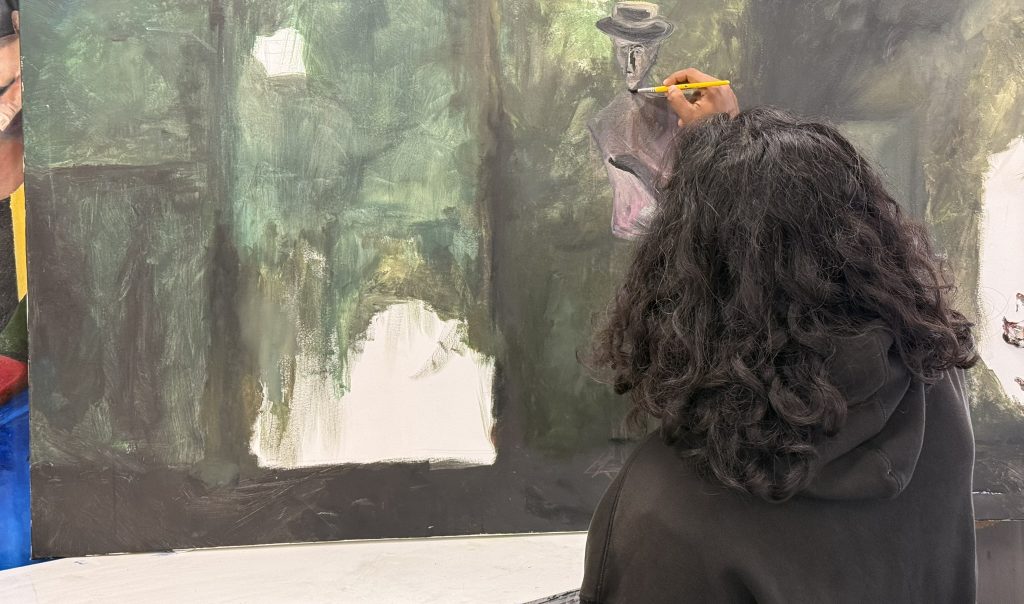
Students are therefore taught not only by educators but also by individuals actively engaged in creative practice, exhibition work, professional dialogue, curriculum innovation, and wider cultural projects. This creates an environment in which students experience art as a living, evolving discipline rather than a purely academic subject.

The department encourages students to understand that creativity exists within real-world contexts. Lessons are informed by contemporary culture, fine art practice, design thinking, visual communication, architecture, photography, digital media, sculpture, printmaking and emerging technologies.

Students are regularly exposed to discussions about gallery practice, curatorship, visual culture, audience engagement, creative identity and professional presentation. This enables learners to develop both technical skills and intellectual understanding.

The culture of the department promotes:

    • Professional creative thinking

    • Independent exploration

    • Experimentation and risk-taking

    • Technical excellence

    • Critical reflection

    • Contemporary relevance

    • Cultural awareness

    • Personal identity through visual language

This professional artistic culture is one of the reasons the department has developed a strong reputation both locally and internationally.

DeyaZone and the Samuel Ward Art & Design Department are internationally connected through a growing network of educational, creative and cultural partnerships.
The department has become recognised for its contribution to conversations surrounding creativity, innovation and future-focused education. This recognition has been built not through marketing language or isolated projects, but through sustained evidence of student opportunity, community impact, curriculum ambition and international collaboration.
The department’s educational philosophy places equal value on academic achievement, personal growth, cultural awareness, creative confidence, student wellbeing and future readiness.
High expectations are combined with strong pastoral support, ambitious curriculum planning and carefully structured progression across all key stages. Students are encouraged to take pride in their work, develop resilience, communicate thoughtfully and contribute positively to both the school and wider community.
The learning environment promotes respect, independence, aspiration and inclusion while maintaining a clear commitment to high-quality outcomes and meaningful student engagement.
Students are provided with consistent opportunities to:
  • develop confidence and independence
  • engage critically with ideas and culture
  • build communication and presentation skills
  • participate in enrichment beyond the classroom
  • experience leadership and collaboration
  • contribute to public and community projects
  • prepare for higher education and careers
  • understand creativity within local and global contexts
The department’s approach ensures that students are not only academically supported but also personally developed through rich and meaningful creative experiences. Students are encouraged to become reflective learners capable of articulating ideas, solving problems independently and contributing positively to wider communities.
This vision can be seen through the department’s combination of:
  • ambitious curriculum entitlement
  • inclusive creative practice
  • strong pastoral relationships
  • community engagement
  • independent learning structures
  • international partnerships
  • enrichment opportunities
  • public exhibition experiences
  • leadership through innovation
The result is a learning environment where students are consistently challenged, supported and inspired.
Rather than treating creativity as an isolated subject area, the department promotes creativity as a way of thinking that strengthens communication, resilience, confidence and future readiness.
Neil David Field-Williams FRSA, Head of Art & Design, works on the Creative Board of the Creativity Community of Practice established through the BIC Education Foundation. (corporate.bic.com)
As a Fellow of the Royal Society of Arts, Neil David Field-Williams has helped position the department within wider international discussions surrounding creativity, education, innovation and inclusion. His work extends beyond school leadership to include outreach, consultancy, educational advocacy, and international collaboration.
Alongside departmental leadership, he has contributed to educational presentations, outreach programmes and professional dialogue through organisations and conferences connected to:
  • The Creativity Community of Practice
  • The BIC Education Foundation
  • International creativity and innovation forums
  • The Marconi Annual Education Festival
  • IRIS Connect
  • National educational conferences
  • Creative learning summits
  • House of Commons arts celebration
The department’s work has also featured in television educational media, conference presentations, educational newspapers and magazines, and online educational broadcasts, helping to showcase how creative education can serve as a transformational force within schools and communities.
These activities are not separate from the department’s daily life. Instead, they directly influence curriculum development, enrichment opportunities and the wider experiences offered to students. Through this work, the department contributes to wider international discussions about creativity, education, inclusion, innovation and the future of learning.
These connections have led to the department’s representation at numerous external conferences, educational events, and international collaborations.
These include:
  • IRIS Connect
  • The Marconi Institute of Creativity
  • National and international educational conferences
  • The House of Commons Arts Celebration
  • Global creativity forums and collaborative projects
Through these activities, the department has become part of a much wider conversation about how creativity can transform education and support young people in an increasingly complex world.
The department’s work is followed by educators, artists, creative practitioners and organisations from across the globe through digital platforms, professional networks and LinkedIn communities.
This international recognition is not based purely on examination outcomes, but on the department’s innovative approach to curriculum design, digital creativity, community engagement and student opportunity.
The curriculum offered through the Samuel Ward Art & Design Department is built around the principle that every student deserves an ambitious and meaningful creative education.
The curriculum has been carefully sequenced and designed to provide students with:
  • Strong technical foundations
  • Exposure to global visual culture
  • Personal creative pathways
  • Opportunities for independent thinking
  • Critical and analytical skills
  • Professional presentation skills
  • Real-world creative experiences
  • Cultural and social awareness
The department strongly believes that creativity cannot thrive within narrow or restrictive educational models. As a result, students are encouraged to explore themes and approaches that connect with their interests, identities and ambitions.
This personalised approach enables students to develop ownership over their work while still receiving structured guidance and rigorous technical support.
The curriculum spans traditional and contemporary practices, including:
  • Fine art
  • Drawing and painting
  • Printmaking
  • Sculpture
  • Mixed media
  • Digital art
  • Photography
  • Graphic communication
  • Illustration
  • Installation concepts
  • Visual storytelling
  • Contemporary conceptual approaches
Students engage with artists and movements from multiple cultures, periods and disciplines. The department promotes global awareness and encourages students to understand how creativity operates across societies and historical periods.
The curriculum also places strong emphasis on visual literacy and vocabulary development. DeyaZone provides extensive resources, including quizzes, vocabulary support, galleries, curriculum guidance and visual references, designed to support both learning and confidence.
Exam boards have recognised the curriculum as providing students with an outstanding curriculum entitlement because of its breadth, ambition, flexibility and depth.
Students are not simply taught how to complete projects; they are taught how to think creatively, communicate visually and develop intellectual confidence.
A major strength of the department is its use of flipped learning and preparatory learning models.
Through DeyaZone and associated digital platforms, students can access curriculum materials, artist references, exemplars, guidance videos, vocabulary resources, and independent learning activities outside of lesson time.
This approach allows students to:
  • Prepare before lessons
  • Revisit learning independently
  • Develop confidence at their own pace
  • Access resources from home
  • Build stronger independent study habits
  • Extend creative exploration beyond the classroom
The flipped learning model helps create a curriculum that is flexible, ambitious and responsive to individual student strengths.
This approach also ensures that students who require additional support, revision opportunities, or differentiated access to learning materials can revisit content independently, strengthening both confidence and long-term understanding.
Students are encouraged to pursue areas of interest while still being guided through structured technical and conceptual development.
This creates an environment where students are active participants in their own education rather than passive recipients of information.
The department believes strongly in helping students develop autonomy, curiosity and confidence.
As a result, many students continue creative work independently outside of school, contribute to exhibitions, develop portfolios for higher education and pursue careers within the creative industries.
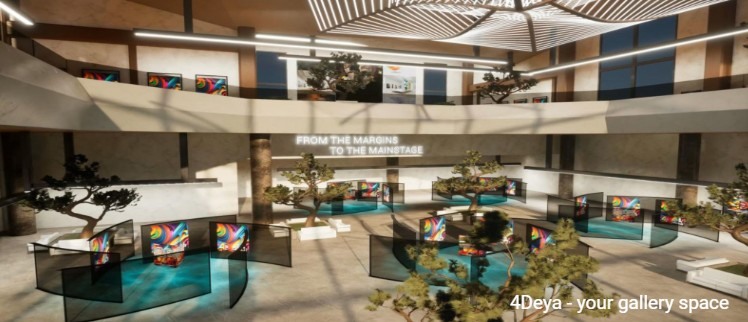
One of the most distinctive aspects of the Samuel Ward Art Department, through its Deya Zone platform, is its pioneering work with virtual galleries and digital exhibition spaces.
The department has become recognised for its innovative use of virtual environments to showcase student work and connect learners globally.
Virtual galleries allow student work to be viewed not only within the school community but also internationally.
Through these platforms, students gain experience in:
  • Professional exhibition presentation
  • Digital curation
  • Audience engagement
  • Global creative dialogue
  • Contemporary modes of artistic display
The department has already established virtual gallery exhibitions for students within the United Kingdom and in France. These exhibitions have enabled students to experience forms of presentation normally associated with higher education institutions, professional galleries and contemporary digital exhibition platforms.
Students are therefore able to see their work presented publicly within immersive online environments rather than only within classroom spaces. This significantly increases pride, confidence and audience awareness.
The virtual gallery initiative has also helped connect students with wider educational and creative communities through online discussions, collaborative events and shared exhibition experiences.
This work has become an increasingly important aspect of the department’s wider international profile and reflects a commitment to ensuring that students understand how creativity now operates within both physical and digital cultural spaces.
These projects have demonstrated how digital environments can expand access to creative expression and enable young people to share their work across geographical boundaries.
The department is currently working with educational groups and creative partners to develop a much larger international network of virtual galleries for students worldwide.
The long-term vision is to help create a global student exhibition network led through collaborative educational partnerships.
This initiative reflects the department’s belief that young people deserve access to authentic global creative experiences.
Students are therefore not isolated within local educational systems, but become part of wider international creative conversations.
The use of virtual galleries also supports:
  • Accessibility
  • Inclusion
  • International collaboration
  • Digital literacy
  • Creative confidence
  • Audience development
  • Cultural exchange
This work places the department at the forefront of contemporary educational practice in the arts.
The Samuel Ward Art & Design Department strongly believes that creativity should contribute positively to communities.
As a result, students regularly engage with external projects that have real public impact.
Two major examples include:
  • The Queens Street Gates project in Haverhill
  • The Haverhill Clocktower project
These projects stand as visible examples of how the department encourages students to contribute meaningfully to public life and civic identity.
Rather than producing work that remains hidden within classrooms, students are given opportunities to understand how creative practice can shape the character of towns, communities and public environments.
The projects required students to engage with:
  • professional processes
  • collaborative planning
  • scale and material considerations
  • public presentation
  • problem solving
  • community dialogue
  • creative accountability
These experiences help students understand the real-world value of creativity and reinforce the department’s belief that education should prepare young people not only for examinations, but for meaningful participation within society.
These projects demonstrate how student creativity can shape public spaces and contribute to local identity.
By working on authentic community commissions and public-facing projects, students gain valuable experience in:
  • Design processes
  • Public consultation
  • Professional presentation
  • Collaborative working
  • Scale and spatial awareness
  • Civic contribution
These opportunities help students understand that art and design are not isolated disciplines but powerful tools capable of transforming environments and communities.
The department also works closely with local organisations, educational groups and community initiatives to ensure that creativity remains connected to wider social engagement.
Students, therefore, experience the value of creativity as something meaningful, active and socially relevant.
The Samuel Ward Art Department is deeply committed to inclusion, diversity and equitable creative opportunity.
The department believes that creativity belongs to everyone and that artistic education should empower students from all backgrounds.
This philosophy influences both curriculum design and wider departmental practice.
Students are encouraged to explore themes relating to:
  • Identity
  • Society
  • Representation
  • Belonging
  • Culture
  • Diversity
  • Personal experience
  • Global perspectives
The department actively supports SEND students and learners who require additional guidance, scaffolding, or alternative pathways.
Support is embedded through teaching approaches, accessible resources, differentiated guidance, one-to-one support, independent learning structures, and positive pastoral relationships.
Students are encouraged to feel safe taking creative risks, expressing ideas and developing confidence within a supportive studio environment.
Creative education is recognised as a powerful means of communication, confidence-building and emotional expression.
The department therefore works hard to ensure that students feel supported, valued and capable of success.
Differentiated teaching, personalised guidance, and accessible resources enable students with diverse strengths and needs to participate fully in creative learning.
The department also continues supporting many students beyond school through:
  • Portfolio guidance
  • Mentoring
  • Career support
  • Creative advice
  • Continued contact with alumni
Many former students remain connected to the department during their college and university studies.
This ongoing relationship reflects the strong community culture that has developed over many years.
The department’s expertise has led to increasing involvement in consultancy and educational outreach.
Through online meetings, collaborative sessions and platform discussions, the department supports other schools, organisations and educational groups seeking to develop creativity-led learning.
Areas of consultancy include:
  • Curriculum development
  • Creative pedagogy
  • Virtual galleries
  • Student engagement
  • Creative technology
  • Visual culture
  • Exhibition practice
  • Digital learning approaches
This work enables the department to contribute to wider educational innovation while also building collaborative partnerships.
The department strongly believes in sharing ideas, supporting other educators, and strengthening creativity across educational systems.
As a result, DeyaZone has become a platform not only for students but also for professional dialogue and educational exchange.
A central aim of the department is to help students understand that creativity can lead to meaningful careers and future opportunities.
Over many years, students from the department have progressed into a wide range of creative pathways, including:
  • Fine art
  • Graphic design
  • Illustration
  • Animation
  • Architecture
  • Fashion
  • Photography
  • Film and television
  • Game design
  • Creative technologies
  • Advertising
  • Education
  • Media industries
The department maintains strong alumni connections and regularly celebrates the achievements of former students.
These alumni networks provide inspiration, guidance and aspiration for current learners.
Students benefit from seeing real examples of creative progression and understanding how artistic education can open professional opportunities.
The department also supports students in developing:
  • Portfolio skills
  • Interview confidence
  • Presentation abilities
  • Creative identity
  • Professional standards
  • Independent thinking
This career-focused approach helps students recognise that creativity is both culturally important and professionally valuable.
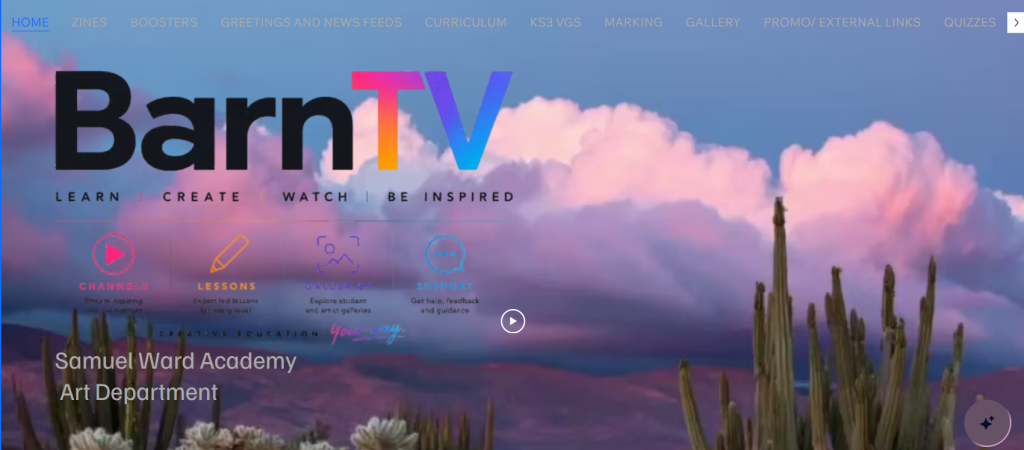
Deya Zone has been designed as an interactive learning environment that supports students across all key stages and extends the department’s physical studio culture.
The platform contains a wide range of educational resources, including:
  • Curriculum guidance
  • Galleries
  • Marking support
  • Quizzes
  • Vocabulary resources
  • Visual references
  • News feeds
  • Exhibition content
  • Promotional links
  • Creative inspiration
These resources support students in becoming more independent, informed and engaged learners.
The platform also allows parents and visitors to better understand the depth and ambition of the department’s educational philosophy.
Through the website, visitors can explore curriculum structures, virtual galleries, student outcomes, enrichment opportunities, and wider creative connections. This transparency reflects a department confident in both its educational standards and its wider vision for young people.
Examples found throughout the platform demonstrate how students are supported through carefully structured progression pathways while still being encouraged to develop independent ideas and personal creative identities.
The platform also reflects the department’s wider connections with organisations and educational groups including:
  • OECD-related creativity initiatives
  • The BIC Education Foundation
  • Creativity Community of Practice networks
  • International educational partnerships
  • University-linked creative collaborations
  • Virtual exhibition communities
  • Creative outreach organisations
These relationships help ensure that students are exposed to broader conversations surrounding creativity, innovation and future careers.
Rather than functioning as a static website, DeyaZone serves as a living creative ecosystem that connects students, teachers, communities, and global creative networks.
The reputation of the Samuel Ward Art & Design Department has grown steadily through its combination of:
  • High-quality teaching
  • Curriculum innovation
  • Community engagement
  • Digital creativity
  • International partnerships
  • Student opportunity
  • Public exhibitions
  • Professional practice
The department is increasingly recognised as a forward-thinking model of creative education.
This recognition is supported by evidence visible throughout the department’s work:
  • students exhibiting publicly and virtually
  • extensive enrichment opportunities
  • strong progression into creative pathways
  • ambitious curriculum planning
  • global creative partnerships
  • strong community engagement
  • professional-level presentation standards
  • inclusive support structures
  • outreach and consultancy work
  • cross-cultural collaboration
The department’s leadership model is built upon visibility, collaboration, accountability and active participation within wider educational and creative conversations.
Leadership within the department is characterised by:
  • clear long-term vision
  • strong curriculum oversight
  • ambitious expectations
  • inclusive opportunities
  • commitment to staff expertise
  • external collaboration
  • reflective practice
  • community engagement
  • innovation through digital learning
  • sustained investment in student opportunity
These qualities are visible not only in outcomes and exhibitions but also in the day-to-day culture experienced by students, parents, visitors, and external partners.
Students benefit from belonging to a department where teaching staff actively model creativity, professional practice, lifelong learning and cultural engagement.
This creates a strong sense of aspiration and purpose within the learning environment.
Its work demonstrates how schools can combine traditional artistic excellence with contemporary technologies, international collaboration and socially engaged practice.
The department’s growing global following reflects genuine interest in its innovative approach to creativity-led education.
Students benefit from being part of a department that believes ambition, imagination and cultural relevance should sit at the heart of learning.
The department continues to expand its public-facing creative opportunities.
A major upcoming initiative is the live art exhibition taking place in early September at Ickworth House in the United Kingdom.
This event will bring together student work from across Suffolk and the surrounding borders, creating a major celebration of youth creativity and artistic achievement.
The exhibition reflects the department’s ongoing commitment to:
  • Public engagement
  • Professional presentation
  • Student opportunity
  • Regional collaboration
  • Creative celebration
Alongside physical exhibitions, the department continues to expand its digital and international work through virtual galleries and global partnerships.
The future vision for the Samuel Ward Art Department through Deya Zone is to continue building a global network connecting young creatives, schools, artists, and organisations.
This vision is built upon the belief that creativity has the power to:
  • Build confidence
  • Transform communities
  • Encourage empathy
  • Support wellbeing
  • Promote innovation
  • Strengthen identity
  • Create opportunity
  • Connect cultures
The Samuel Ward Art Department and its Deya Zone platform represent a unique model of contemporary creative education.
Combining practising artists, ambitious curriculum design, global partnerships, digital innovation, community engagement and inclusive educational values, the department has developed into a recognised centre for creativity that extends far beyond a traditional classroom environment.
Students are not simply taught art; they are encouraged to become thinkers, makers, collaborators and contributors to culture.
Through virtual galleries, international networks, community projects, consultancy work, flipped learning, public exhibitions and professional creative practice, the department continues to redefine what creative education can look like in the modern world.
For parents, visitors, and educational partners, DeyaZone offers clear insight into a department that values ambition, innovation, inclusion, and opportunity.
It demonstrates how creativity can become a powerful force for personal growth, cultural connection and future success.
Above all, it reflects a belief that young people deserve access to rich, meaningful and globally connected creative experiences capable of shaping both individual futures and wider communities.